


Your Questions, Answered
Find answers to common questions about our industrial warehousing, storage, and logistics services. Learn how Adams Industries helps businesses streamline operations with flexible solutions and reliable transportation connections.
Warehousing
Adams Industries provides specialized warehousing and yard storage for a wide range of industrial sectors, including oil & gas, agriculture, building materials, renewable energy, and highway/heavy civil construction.
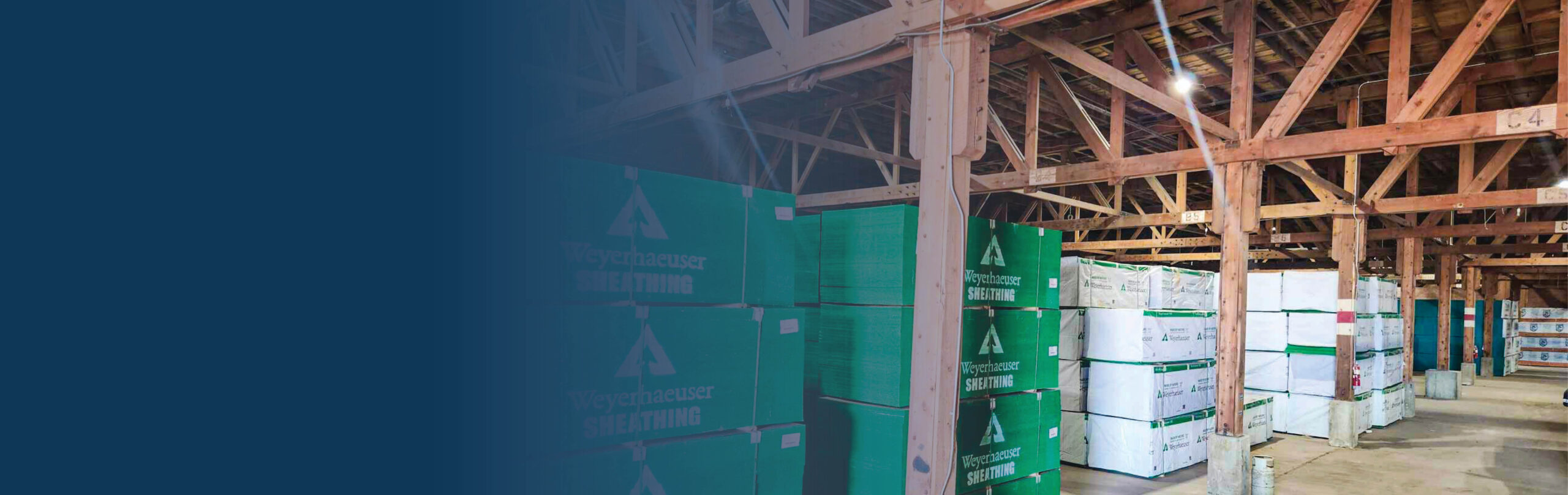
Yes. Our facilities feature over 600,000 square feet of indoor warehouse space along with 800+ acres of secure outdoor laydown storage, allowing us to accommodate everything from weather-sensitive inventory to large bulk assets.
Yes. We specialize in handling oversized, heavy, and dimensional freight. Our facilities are equipped with heavy-lift machinery, high-clearance bays, and reinforced outdoor laydown space designed specifically for industrial equipment.
Yes. We utilized an advanced Warehouse Management System (WMS) backed by a dedicated inventory management team. Clients receive real-time visibility and on-demand access to track their stock levels, receipts, and shipments whenever needed
- Staging Yards are designed for fast turnover—holding equipment, trailers, or containers for a few days before immediate dispatch to a job site or customer.
- Laydown Yards offer dedicated long-term outdoor acreage for heavy, weather-resistant materials (like steel, pipe, or wind components) where items sit securely until needed for project phases.
- Storage Fees: Billed per pallet, per square foot, or per acre on a monthly recurring basis.
- Handling Fees (In/Out): One-time charges to unload (Inbound) and load out (Outbound) freight.
- Value-Added / Labor Charges: Billed per hour or per project for custom services like repackaging, tagging, or specialized rigging.
- Beyond standard put away and storage, many industrial facilities offer:
-
- Kitting & Assembly: Combining multiple components into custom delivery packs.
-
- Cross-Docking: Unloading inbound freight directly onto outbound trucks with minimal holding time.
-
- Relabeling & Barcoding: Re-tagging pallets, crates, or bundles to match specific customer EDI/inventory requirements.
-
- Container Stuffing & Unstuffing: Loading or unloading international sea containers and securing loads for over-the-road transport.
FTZ
An FTZ is a secure, duty-free area located in or near a U.S. Port of Entry, legally considered outside of U.S. Customs territory. Importers can store, inspect, repackage, or process foreign and domestic merchandise inside the zone without paying U.S. customs duties or excise taxes until the goods enter U.S. domestic commerce.
Nearly all foreign and domestic merchandise qualifies for FTZ storage and handling, provided it is permitted under U.S. law. Common qualifying products include industrial components, raw materials, consumer goods, machinery, automotive parts, and bulk commodities.
- Yes. Domestic companies that import foreign components, assemble finished products locally, or re-export goods internationally benefit significantly. Key advantages include:
-
- Duty Deferral: Postpone customs duty payments until products leave the zone for domestic delivery.
-
- Duty Elimination: Pay zero U.S. duties on goods or damaged inventory that are re-exported out of the country.
-
- Inverted Tariffs: Pay the lower duty rate if finished products assembled in the FTZ carry a lower tariff than the imported individual raw components.
- Reduced Processing Fees: Consolidate multiple weekly shipments into a single weekly entry, drastically reducing Merchandise Processing Fees (MPF).
Rail
Rail transloading is the process of transferring freight between railcars and trucks (or storage facilities) along its journey. It allows businesses to leverage the cost of long-haul rail shipping, even if their origin or destination facilities don’t have direct rail track access.
Nearly any commodity can be transloaded, including dry bulk (grains, aggregates, plastics), liquid bulk (chemicals, fuels, food-grade oils), palletized goods, heavy machinery, dimensional lumber, and steel coils.
A single railcar can typically carry the volume of 3-4 full truckloads, depending on the material weight. Shipping by rail significantly lowers per-ton transportation costs, cuts fuel expenditures, and drastically reduces carbon emissions compared to long-haul trucking.
Transloading hubs often feature dedicated track storage and switching capabilities. This allows incoming railcars to be staged in a private yard until truck capacity is ready, eliminating demurrage fees charged by major rail carriers while ensuring continuous inventory availability.
Transloading
Transloading is the process of transferring freight from one mode of transportation to another (such as railcar to truck, or truck to barge) along its delivery route. It enables businesses to take advantage of the cost savings of long-distance rail shipping, even if their origin or destination facility lacks a direct rail spur.
- Transloading involves transferring goods between different modes of transport (e.g., from a railcar to a flatbed truck) and often includes handling specialized, heavy, or bulk materials.
- Cross-docking involves transferring goods between similar modes of transport (e.g., from an inbound semi-truck directly to outbound delivery vans) with little to no storage time, primarily used for palletized retail or e-commerce orders.
- Cost Reduction: Leverages fuel-efficient long-haul rail to lower per-ton shipping costs compared to long-distance trucking.
- Network Flexibility: Reaches destinations without direct rail access by combining long-haul rail with short-haul truck delivery.
- Capacity Expansion: One standard railcar carries the equivalent volume of 3 to 4 full truckloads, reducing total driver and truck requirements.
- Congestion Bypass: Allows shippers to transload outside dense metro hubs to bypass yard bottlenecks and avoid heavy demurrage charges.
- Nearly any industrial or commercial freight can be transloaded, including:
-
- Dry Bulk: Grains, sand, cement, plastic pellets, and agricultural feeds.
-
- Liquid Bulk: Fuel, chemicals, food-grade oils, and liquid fertilizers.
-
- Dimensional & Heavy Freight: Structural steel, steel coils, lumber, pipe, and heavy machinery.
-
- Packaged & Palletized Goods: Supersacks, boxed inventory, and bundled raw materials.
- Depending on the commodity, specialized transloading facilities utilize:
-
- Heavy-Lift Cranes & Rigging: For steel, coils, pipe, and heavy machinery.
-
- Conveyors & Pneumatic Pumps: For dry-bulk powders, grains, and aggregates.
-
- Liquid Transfer Pumps & Hoses: For hazardous or food-grade liquid transfers.
-
- Custom Forklifts & Attachments: For lumber, paper rolls, and palletized goods.
- Boxcars: For palletized goods, paper rolls, and packaged freight.
- Covered Hoppers: For weather-sensitive dry bulk (grains, plastic pellets).
- Open-Top Hoppers & Gondolas: For coarse aggregates, scrap metal, and heavy bulk.
- Flatcars & Centerbeams: For lumber, pipe, structural steel, and oversized equipment.
- Tank Cars: For liquid chemicals, petroleum, and food-grade liquids.